
Home > Blog
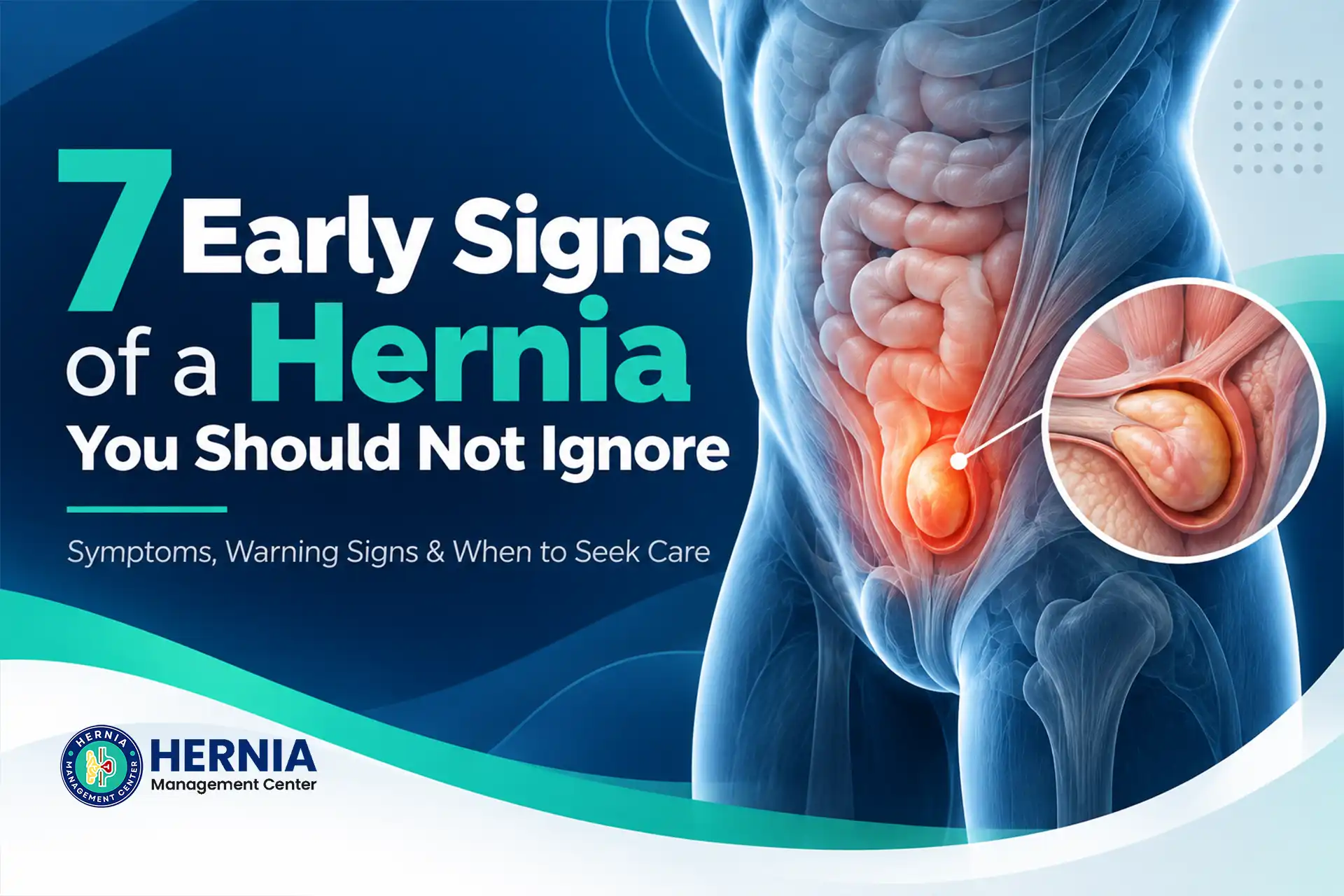
Recognizing the early signs of a hernia matters because a proper diagnosis can help you understand whether observation, planned repair, or urgent treatment is appropriate. Most hernias are not emergencies when first noticed, but some can become trapped or strangulated and require immediate medical care.
At Hernia Management Center in Lahore, patients are assessed according to the type of hernia, symptoms, previous surgery, overall health, and how the problem affects daily life. This guide explains seven early signs you should know, plus the red-flag symptoms that should never wait for a routine appointment.
Quick answer: Common early hernia signs include a new bulge or lump, groin or abdominal pressure, aching or burning discomfort, symptoms that worsen with coughing or lifting, a bulge that changes with position, a dragging or heavy sensation, and symptoms related to the hernia location such as scrotal swelling or reflux. Sudden severe pain, vomiting, color change, or inability to pass stool or gas requires urgent assessment. |
A hernia occurs when tissue pushes through a weak area or opening in the muscle or connective tissue that normally holds it in place. Hernias commonly occur in the groin or abdominal wall, including inguinal, femoral, umbilical, epigastric, and incisional hernias. A hiatal hernia is different because part of the stomach moves upward through the diaphragm and may not create a visible external bulge.
The symptoms depend on where the hernia is, how large it is, whether it can move back into place, and whether surrounding tissue is being compressed. Some people have very few symptoms at first, which is why noticing small changes can be useful.
A visible or palpable bulge is one of the most recognizable early signs of a hernia. In an inguinal hernia, the lump usually appears in the groin near the pubic bone. An umbilical hernia appears at or around the belly button, while an incisional hernia may develop near a previous abdominal surgical scar.
The bulge may be small at first and may not hurt. It can become easier to see when you are standing and may become more prominent when you cough, strain, laugh, or lift something. The NHS notes that a hernia lump can enlarge with coughing or sneezing and may become smaller when lying down. View Hernia Management Center services
Not every hernia begins with sharp pain. Some patients describe pressure, fullness, or a heavy sensation in the lower abdomen or groin. The feeling may be most noticeable after being on your feet for a long time, during exercise, or toward the end of a physically active day.
Groin hernias can also create a dragging sensation. Because this can feel like muscle fatigue, patients may overlook it until a visible bulge appears. Persistent or recurrent pressure in the same area deserves assessment, particularly if it changes with standing, coughing, or straining.
A hernia may cause a dull ache, burning sensation, tenderness, or mild pain. Mayo Clinic lists burning or aching at the bulge and pain, discomfort, or pressure in the groin among common inguinal hernia symptoms. The discomfort may come and go rather than remain constant.
Pain alone does not prove that you have a hernia because muscle, joint, nerve, lymph-node, and other conditions can cause similar symptoms. However, pain associated with a new lump or with a consistent pattern of coughing, lifting, or straining makes a hernia more important to rule out.
One of the most useful clues is that the symptoms change when pressure inside the abdomen increases. A hernia may become more noticeable when coughing, lifting a heavy object, bending, exercising, or straining during a bowel movement. The bulge may enlarge temporarily and discomfort may increase.
This pattern is particularly typical of groin and abdominal-wall hernias. It does not mean that lifting alone caused the hernia; rather, increased abdominal pressure can make an existing weak area more apparent. If the same lump or discomfort repeatedly appears with exertion, arrange an examination instead of repeatedly treating it as a muscle strain.
Some early hernias are reducible, meaning the protruding tissue moves back when you lie down or sometimes with gentle pressure. A lump that appears while standing but becomes smaller when resting is a classic pattern that patients often notice before seeking care.
A reducible hernia is not the same as a healed hernia. The weak area remains present even if the bulge disappears. Mayo Clinic notes that physical examination while standing and coughing is often enough to diagnose an inguinal hernia, with ultrasound, CT, or MRI considered when the diagnosis is unclear.
In men, a larger inguinal hernia may extend toward the scrotum and cause swelling, heaviness, or discomfort. In women and men, a femoral hernia can present as a smaller lump at the top of the thigh near the groin. Femoral hernias are less common but deserve timely assessment because they have a greater tendency to become trapped.
If you notice a new groin or upper-thigh lump, do not assume its location tells you exactly which type of hernia it is. A clinician examines the anatomy to distinguish an inguinal hernia, femoral hernia, lymph node, soft-tissue lump, or another cause.
Not every hernia produces a visible lump. A hiatal hernia occurs when part of the stomach moves through the diaphragm into the chest. Instead of a groin or abdominal bulge, some people may experience heartburn, acid reflux, regurgitation, upper-abdominal discomfort, or symptoms that worsen after meals or when lying down.
These digestive symptoms are common and can have many causes, so they should not be self-diagnosed as a hernia. Persistent reflux, swallowing difficulty, unexplained upper-abdominal symptoms, or a known hiatal hernia should be discussed with a healthcare professional.
The seven signs above usually call for a medical assessment rather than panic. The situation changes if a hernia becomes trapped or its blood supply is threatened. Both the NHS and Mayo Clinic advise urgent care for symptoms that can suggest obstruction or strangulation.
Sudden severe pain or pain that rapidly becomes worse
A previously soft bulge becoming hard, very tender, or impossible to reduce
Nausea or vomiting
A hernia bulge becoming red, purple, dark, or otherwise discolored
Abdominal bloating with inability to pass stool or gas
Fever or feeling acutely unwell in association with a painful hernia
Important: These symptoms should not wait for a routine clinic appointment. Seek urgent or emergency medical assessment.
Many groin and abdominal-wall hernias can be diagnosed from the medical history and a physical examination. The clinician may examine you while standing and may ask you to cough or strain because this can make a hernia more visible. If the diagnosis is uncertain, or if the hernia is deep or complex, imaging such as ultrasound, CT, or MRI may be considered.
A useful consultation also looks beyond the lump. Your surgeon may ask when it first appeared, whether it is becoming larger, what activities trigger symptoms, whether it reduces when lying down, whether you have had previous abdominal surgery, and whether the hernia is limiting work or exercise.
No. The correct management depends on the hernia type, symptoms, patient factors, and risk of complications. Some minimally symptomatic inguinal hernias in selected adults may be monitored with informed follow-up, while symptomatic or enlarging hernias are more likely to lead to discussion of repair. Femoral hernias and complicated hernias generally require a different level of concern.
If surgery is being considered, both open and minimally invasive approaches may be discussed depending on the anatomy and clinical situation. The operation should be selected for the patient rather than using one technique for every hernia.
Related guide: Laparoscopic Hernia Surgery in Lahore: Procedure, Benefits, Recovery & What to Expect
Consider arranging an assessment if you have a new or persistent groin or abdominal bulge, recurring discomfort with lifting or coughing, pressure or heaviness in the groin, swelling around a previous operation scar, or symptoms that are beginning to limit normal activity. Early evaluation does not automatically mean surgery; it means finding out what the problem is and understanding your options.
At Hernia Management Center in Lahore, assessment focuses on identifying the hernia type, explaining suitable management options, and helping patients understand recovery and warning symptoms. Bring previous surgical notes, scans, and medical reports if you have had earlier hernia or abdominal surgery.
Book or inquire: Contact Hernia Management Center Lahore
The early signs of a hernia can be easy to overlook because symptoms may appear only during activity and may improve with rest. A new bulge, pressure, aching, burning, heaviness, or symptoms that consistently worsen with coughing or lifting are good reasons to arrange an assessment. Some hernias can be monitored, while others may need planned repair.
The most important distinction is between a stable hernia and a potentially complicated one. Sudden severe pain, vomiting, color change, a hard irreducible lump, or inability to pass stool or gas requires urgent medical attention.
Concerned about a possible hernia? Book a focused hernia assessment in Lahore to confirm the diagnosis and discuss appropriate next steps. |
Receive new hernia education, recovery guidance, and clinic updates to support informed healthcare decisions for patients across Lahore.
Contact Hernia Management Center Lahore | Book Consultation
Hernia Managment Center - Lahore.
Copyright © 2026. All rights reserved.