Home > Blog
A hernia can begin as a small bulge or mild discomfort, but over time it may start affecting your routine, work, exercise, and overall quality of life. Many patients in Lahore search for the most effective treatment option and often ask whether laparoscopic hernia surgery is the right choice for them.
Laparoscopic hernia surgery, also called keyhole hernia surgery, is a minimally invasive procedure used to repair selected hernias through small incisions. Compared with traditional open surgery, it may offer benefits such as smaller cuts, less pain after surgery, and earlier return to normal activities in suitable patients. However, it is not automatically the best option for every case. The right treatment depends on the type of hernia, its size, whether it has been repaired before, and your overall health.
At Hernia Management Center Lahore, patients can receive focused assessment and treatment planning for different types of hernia, including minimally invasive and laparoscopic options where appropriate. This guide explains how laparoscopic hernia surgery works, who may be suitable, its advantages, recovery expectations, and when you should consult a specialist.
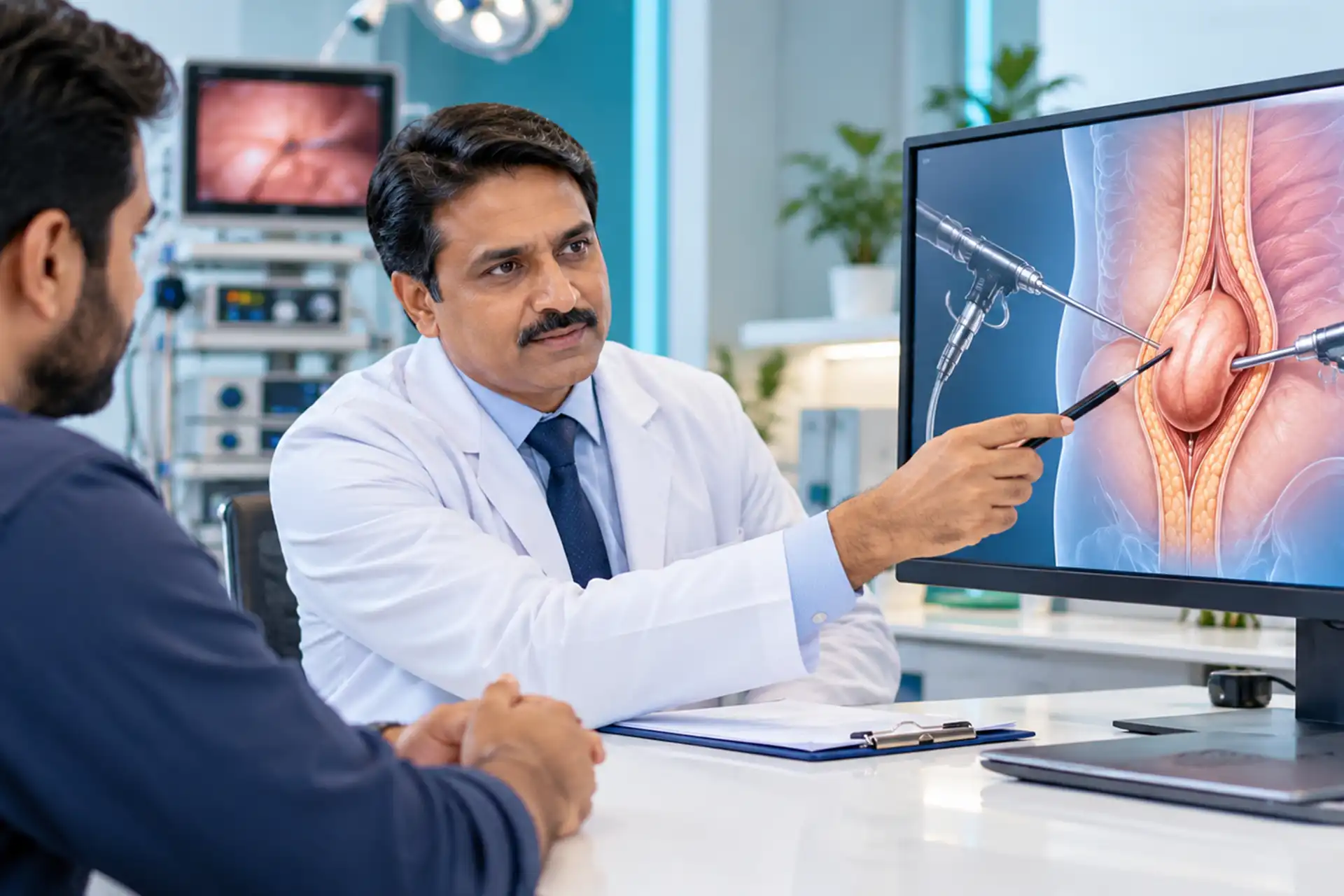
Laparoscopic hernia surgery is a modern surgical technique that repairs a hernia through a few small incisions instead of one larger cut. During the procedure, the surgeon inserts a tiny camera called a laparoscope along with special instruments to view the hernia on a monitor and repair the weakened area.
This technique is commonly used for inguinal hernia, and in selected cases for abdominal wall hernias as well. In many adult repairs, mesh may be used to reinforce the weak area and reduce the risk of recurrence. The exact approach depends on the hernia type and the surgeon’s assessment.
For groin hernias, two well-known minimally invasive techniques are often discussed:
Both are established laparoscopic methods, but the best choice depends on patient anatomy, previous surgery, and surgeon expertise.
Laparoscopic repair is often considered for:
Not all hernias are equally suited to laparoscopy. For example, a very large hernia, a complicated recurrent case, or a patient with certain previous abdominal operations may be better managed with a different surgical approach.
That is why the most important question is not simply “Is laparoscopy better?” but rather “Which procedure is most suitable for my hernia?”
The exact steps depend on the type of hernia and the chosen technique, but the general procedure usually includes:
Anaesthesia
The patient is given anaesthesia so the procedure can be performed safely and comfortably.
Small Incisions
A few small cuts are made in the abdomen to insert the camera and instruments.
Viewing the Hernia
The laparoscope sends images to a monitor, allowing the surgeon to clearly see the hernia and surrounding tissue.
Reducing the Hernia
The protruding tissue is returned to its normal position.
Reinforcing the Weak Area
In many adult cases, the weak area is reinforced with mesh.
Closing the Incisions
The small cuts are closed carefully after the repair is complete.
Because the incisions are small, this method is often referred to as keyhole surgery.
For selected patients, laparoscopic hernia surgery may offer several benefits:
Since the surgery is performed through small cuts, visible scarring is usually less than with larger open incisions.
Many patients experience less pain after minimally invasive surgery compared with traditional open repair, especially in suitable groin hernia cases.
Patients may be able to return to walking and regular daily activity sooner, depending on the type of hernia and the complexity of the repair.
If a patient has hernias on both sides, laparoscopic surgery can often allow both to be repaired during the same procedure.
For a patient who had a previous open groin hernia repair, a laparoscopic approach may sometimes allow the surgeon to work in a different tissue plane.
These are potential advantages, not guarantees. Recovery and outcomes can vary from patient to patient.
This is one of the most common questions patients ask. The simple answer is: not always.
Open hernia repair and laparoscopic hernia repair are both well-established techniques. One is not automatically better for every patient. The decision depends on:
A specialist consultation is important because the best operation is the one that fits the hernia and the patient, not the one that is most commonly advertised.
A patient may be considered for laparoscopic hernia surgery if:
Some patients may not be ideal candidates. Large complicated hernias, certain previous surgeries, or other medical conditions may influence the treatment plan.
A consultation with a hernia specialist in Lahore is the best way to determine suitability.
Recovery varies from person to person, but many patients are encouraged to begin light walking soon after surgery. Movement is usually helpful for circulation and general recovery.
Some patients with desk-based jobs may return earlier, while those whose work involves physical exertion or lifting may need more time.
Walking is usually encouraged early, but heavier lifting and strenuous exercise should only be resumed according to your surgeon’s instructions.
A balanced diet and good hydration support recovery. Some patients may also benefit from managing constipation and avoiding activities that create excessive strain.
Like any operation, laparoscopic hernia surgery has risks. While many patients recover well, it is important to discuss the possible complications with your surgeon.
Potential concerns may include:
A trustworthy surgical consultation should discuss both the advantages and the risks, rather than making unrealistic promises.
Not every hernia is an emergency, but some symptoms require urgent medical attention.
Seek urgent care if:
These symptoms may suggest a serious complication and should not be ignored.
At Hernia Management Center, treatment planning begins with the diagnosis. Patients are assessed carefully so the surgeon can understand:
Some hernias can be diagnosed clinically, while others may require imaging depending on the case.
The aim is not to recommend the same surgery to everyone, but to choose the approach that best fits the patient’s hernia, symptoms, and recovery needs.
Patients often ask about the cost of laparoscopic hernia surgery in Lahore. The final cost can vary based on several factors, including:
A proper consultation is the best way to understand both the medical plan and the expected cost.
A hernia-focused service offers an advantage because hernias are not all the same. A specialized consultation helps patients understand:
At Hernia Management Center Lahore, the goal is to provide focused assessment, clear explanation, modern treatment options, and practical recovery guidance for patients dealing with hernia.
Laparoscopic hernia surgery in Lahore can be an excellent option for selected patients. It offers a minimally invasive way to repair certain hernias and may provide benefits such as smaller incisions, less postoperative pain, and quicker return to normal activities. However, the best treatment always depends on the type of hernia, the patient’s condition, and proper surgical evaluation.
If you have a groin bulge, abdominal wall swelling, discomfort, or a diagnosed hernia, the most important next step is a specialist consultation. Early assessment can help you understand your options and plan the right treatment with confidence.
Book your consultation at Hernia Management Center Lahore to discuss whether laparoscopic hernia surgery is the right option for you.
Laparoscopic hernia surgery is a minimally invasive procedure that repairs a hernia through small incisions using a camera and specialized instruments.
Some discomfort is expected after surgery, but many patients experience less postoperative pain compared with traditional open surgery.
Recovery varies, but many patients return to light daily activities fairly quickly. The exact timeline depends on the hernia type, repair, and individual healing.
Yes, in selected bilateral inguinal hernia cases, both sides can often be repaired during the same laparoscopic procedure.
No. Suitability depends on the type of hernia, previous surgery, medical history, and overall clinical assessment.
Receive new hernia education, recovery guidance, and clinic updates to support informed healthcare decisions for patients across Lahore.
Contact Hernia Management Center Lahore | Book Consultation
Hernia Managment Center - Lahore.
Copyright © 2026. All rights reserved.